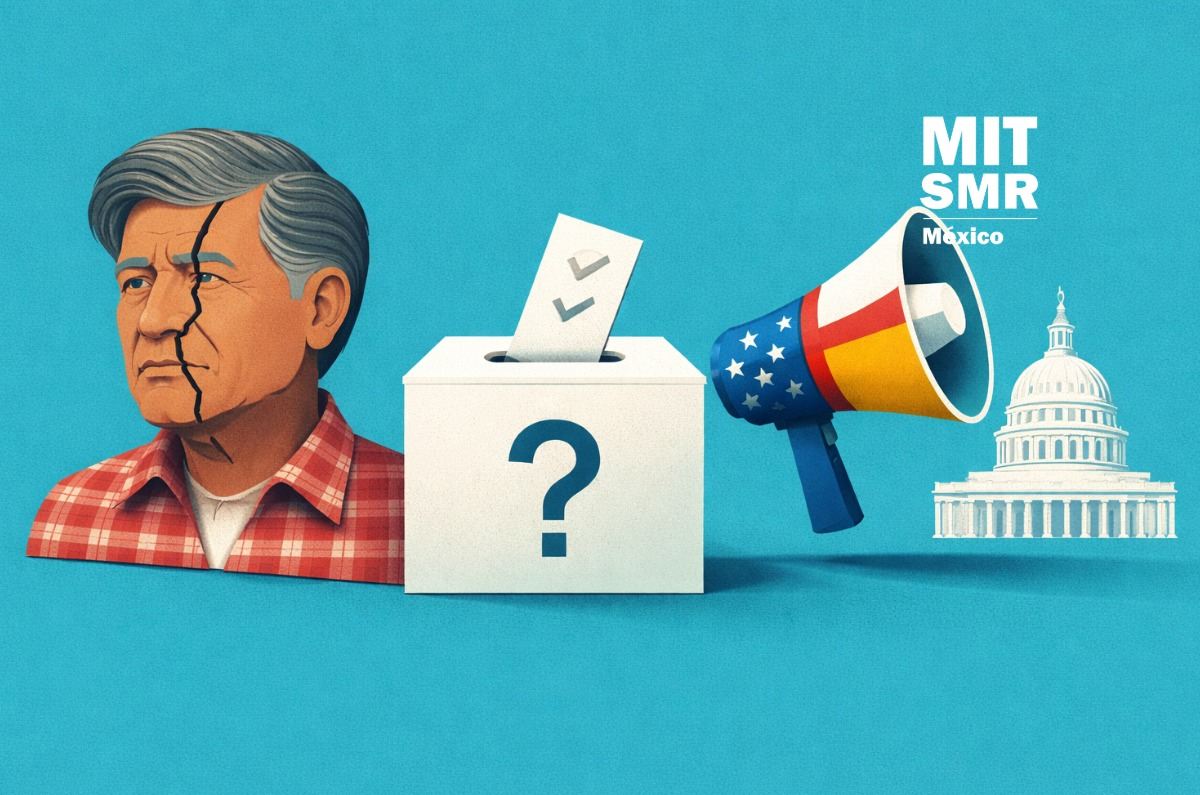
Cesar Chavez’s legacy faces new scrutiny, exposing deeper questions about Latino leadership, identity, and political representation in the U.S. amid growing uncertainty.
What has happened to Cesar Chavez’ legacy is a tragedy for the Latino community. He was one of the few historically and nationally recognized Latino icons in the U.S. His face, hunger strikes, and plight for farmworkers are immortalized in murals and art in predominantly Mexican-American communities across the country. Communities like Boyle Heights, East Los Angeles, and La Villita in Chicago, to name a few.
After the allegations of abuse and sexual misconduct, the legacy of an icon is forever tainted. Whether the allegations are true or not, this is a demoralizing blow to a Latino community that already feels persecuted.
The Latino community’s morale has been steadily declining with the ICE raids, separations of families, mobilization of neighborhood warning systems, the building of massive detention centers, and overall economic uncertainty. This news will only take it to a new low.
Latino Voters Have Options: That’s a Good Thing
The question of national Latino leadership
My immediate reaction to the news was how it exposed the lack of a true national Latino/a leader. I asked a friend, who is our Martin Luther King Jr.? Our Rev. Jesse Jackson? We don’t have one, I stated.
He replied:
“Maybe we haven’t allowed ourselves to have one.”
It made me reflect. I thought about how we all have Latino leaders that we admire and respect, but do they really rise to the level of holistically representing us?
His point was that while there are national Latino political, business, community, and philanthropic leaders, they represent regional, demographical, and ideological perspectives, and maybe we, as a community, have been content with that.
Before the allegations, some would argue that Cesar Chavez was that national leader. Others may argue that fellow United Farm Workers co-founder, Dolores Huerta, is that leader today.
I disagree. I respect her work and her cause, but her image has become more synonymous with overexposure than actual impact.
California as an example
You would think that having two Latino candidates in the California governor’s race is a good thing. Having a Latino governor of the most populous state in the nation would help propel a Latino governor to national prominence, much like it has for Gavin Newsom.
The problem is that only one of those Latino candidates has a realistic chance to make it to the runoff. In California’s open primaries, Democrats and Republicans compete for the top two spots; the winners then move on to the general election.
One is polling at 13%, and the other is polling at 4%. In a recent social media political ad, the lower candidate called for the other to drop out. His rationale was that a survey showed that if he does, the chances of a Republican winning the governor’s race would be reduced from 27% to 8%.
First, no Republican has a chance of winning the California gubernatorial election. Period. Democrats have held a supermajority for over 20 years. Second, a 27% chance of victory already means that any Democrat would win by 73%!
What this ad represented was the “crabs in a bucket” mentality that we’ve all heard about and experienced.
The lower candidate should be the one to drop out, but he’d rather take a percentage of the Latino vote from the other and potentially jeopardize him getting in the run-off.
That’s the state of Latino leadership.
Homogenizing Latino voters
It’s not breaking news to say that many Latinos are experiencing an identity crisis with the Democratic Party. The legacy and image of Cesar Chavez have played a role in that.
Think of the picture of Robert F. Kennedy embracing Cesar Chavez on a hunger strike. I bet it came to your mind immediately.
That image and its association with the Kennedy’s has been worth gold to Democrats. It’s been a symbol of emotional appeal to Latino voters, and it has worked. For my grandmother’s generation, John F. Kennedy was nearly God himself, and Robert Kennedy by association. Many older Latinos attribute their loyalty to the Democratic Party to the Kennedys and to that image.
It has been so effective, that Democrats have equated the farmworker and immigrant experience with that of the whole Latino community. The well documented fact that Cesar Chavez was anti-immigrant is an afterthought.
This past presidential election cycle, the Spanish language and Latino voter ads all spoke about the immigrant experience; they almost always used images of farmworkers, and focused on those narratives.
They forgot that approximately 81% of eligible Latino voters in the United States are U.S.-born, according to 2024 data. The vast majority of Latinos in the U.S. are citizens, and this number is only growing as the younger generation reaches voting age.
Cesar Chavez and the Kennedys are not relevant to them. What truly matters to them is relatability; that’s why that national Latino leader today is so important.
Trump vs. California: Una guerra política sin tregua
Repaint, rename, fight?
In Los Angeles alone, there are numerous murals and monuments honoring Cesar Chavez, including the Cesar Chavez Monument at Unidad Park, murals at California State University, Los Angeles, and, of course, Cesar Chavez Avenue.
The details of the allegations are yet to be made public, but if they are proven legitimate, they are going to pose a public question that the Latino community never imagined it would confront. Are you going to replace that art? Are you going back to renaming the street Brooklyn Avenue? Are you going to erase Cesar Chavez from the community’s memory and history books?
The broader Latino community’s reaction to the news will take some time to unfold, and we shouldn’t be surprised if these questions create controversy, fights, and deep division within the community for years to come.
Te recomendamos Síguenos en Google News




George I. Gonzalez
Fundador de la firma Complex Made Simple. Experto en comunicaciones de política pública y comentarista Fundador de Complex Made Simple y experto en comunicaciones politicas y corporativas. Originario de CDMX. Fue designado de la Casa Blanca y subsecretario de prensa de desarrollo urbano y vivienda. También fue gerente de comunicaciones de política pública de Facebook en Washington D.C.y recibe contenido exclusivo