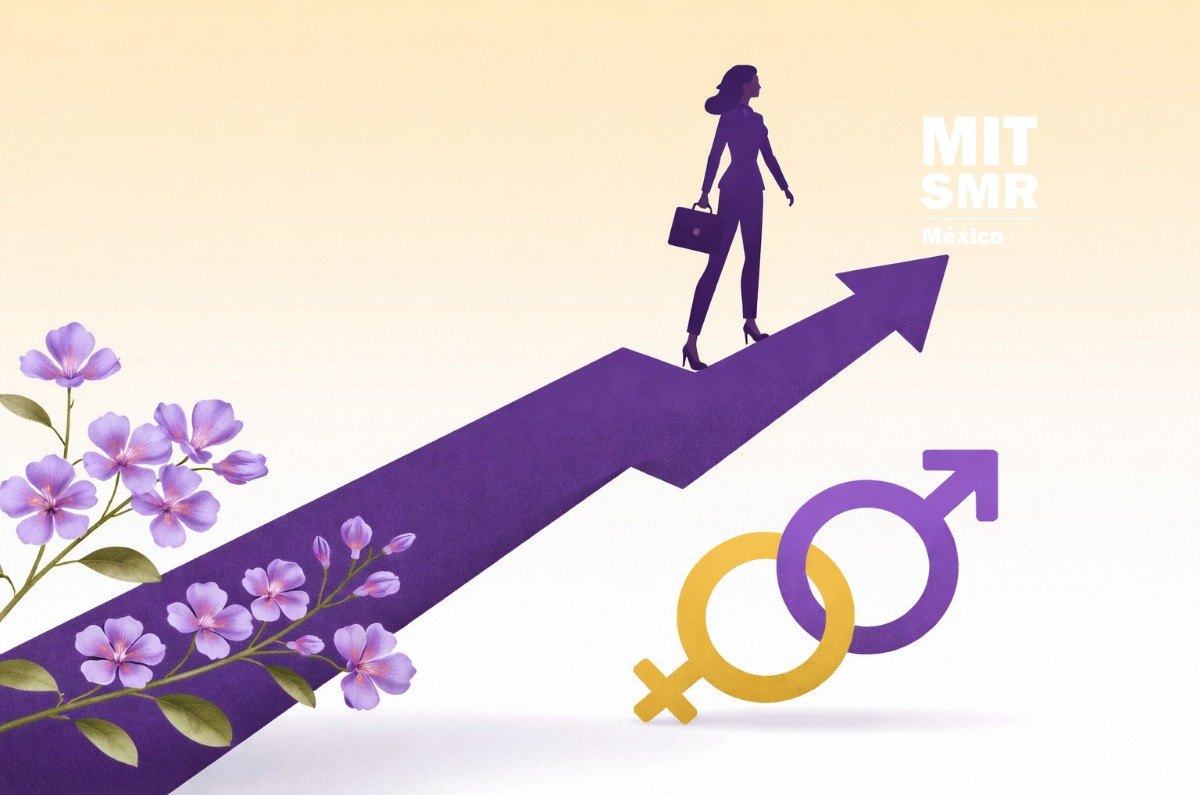
Mexico’s push for women’s leadership grows, but progress remains uneven. Data shows gender equality boosts growth, while declining CEO representation highlights the unfinished agenda.
In March, Mexico turns purple. It is a hue born not only from the blooming jacarandas that canopy its streets but also from the global movement commemorating International Women’s Day. The color serves as a direct link to the past, adopted from the early 20th-century suffragettes who chose purple to symbolize the loyalty and dignity of their fight for equality.
It was in Manchester, England, in 1903 that Emmeline Pankhurst and her daughters launched the Women’s Social and Political Union. Their mission was twofold: to advocate for women’s right to vote and to defy the rigid societal stereotypes of their era. Fast forward to 2026, and the vision first raised by the suffragettes remains just out of reach. The work toward a more egalitarian world continues—and the cost of waiting is now quantifiable.
The economic imperative has never been clearer: the World Bank’s 2026 Women, Business and the Law report reveals that fully integrating women into the workforce and entrepreneurial ecosystem could expand the global economy by a massive 20%. Between 2023 and 2025, 68 economies introduced 113 legal reforms designed to expand women’s economic participation—a sign that progress, however incremental, is underway.
8M, la fecha que conmemora la lucha de las mujeres por la igualdad
This gradual shift is also reflected in the media landscape. Every March, publications release their lists of the most powerful women across various sectors, highlighting growing visibility. For instance, as of Fortune’s 2025 published list, 55 individual women have held Fortune 500 CEO roles—a small but significant number in the context of the largest companies in the United States. While this means women now run 11% of these businesses, a notable milestone, progress remains slow.
This hard-won progress is now encountering significant headwinds. The recent wave of corporate rollbacks to DEI programming in the U.S. has created a more volatile landscape for women seeking leadership roles. According to Jennifer McCollum, president and CEO of Catalyst, reducing commitment to these policies threatens to reverse current gains and could foreclose opportunities for generations of aspiring talent to come.
A similar pattern of uneven progress is visible in Mexico. While women’s representation in senior management has grown—with Mexico ranking seventh globally at 35% in roles such as CFO or HR director—their path to the highest office remains constrained. In fact, women’s share of CEO positions declined, falling from 4% to 3% between 2023 and 2024, underscoring how fragile gains can be without sustained structural support.
Although parity in decision-making positions has not yet been achieved, Mexico has seen meaningful changes in business leadership aimed at promoting equality. One example is the Ley General para la Igualdad Sustantiva entre Mujeres y Hombres (General Law for Substantive Equality between Women and Men), which reinforces the mandatory nature of public policies designed to close gender gaps. The new legal framework seeks to guarantee genuine equality of treatment and opportunities in both the public and private sectors, promoting gender parity and work environments free from violence.
It has been proven that investing in gender equality boosts performance and provides a competitive advantage. Grant Thornton’s 2026 Women in Business study shows that medium-sized companies that maintain their gender equality initiatives—and plan to implement new measures—are the most likely to experience significant growth, both in revenue and in employee headcount.
A balanced leadership between men and women leads to better decision-making, drives innovation, and accelerates growth. Gender equality is, quite simply, good business. Not only does it contribute to women’s economic empowerment—recognizing them as both beneficiaries and partners in growth and development—but it also strengthens the private sector’s commitment to this strategic agenda, generating a virtuous cycle that multiplies the impact of equality policies.
If the jacarandas bloom each year without fail, so too will the resolve to build a future where leadership reflects the full breadth of Mexico’s talent—and where purple symbolizes not a fight, but a victory finally won.
Te recomendamos Síguenos en Google News



Nayana Guerrero
Directora Asociada del Departamento de Gestión y Liderazgo en el Tec de Monterrey Especialista en liderazgo femenino, género, Inteligencia Artificial y negocios, promueve un liderazgo inclusivo e innovación ética. Doctora en Ciencias Administrativas por la UNAM, con estudios en Sciences Po Paris y American University; es profesora en la FCA-UNAM. Con más de 90 conferencias internacionales y 10,000 personas capacitadas, combina academia y acción para impulsar la igualdad de género y la ética en los negocios. Su trabajo conecta investigación, docencia y divulgación, promoviendo organizaciones sostenibles e inclusivas con perspectiva de género.y recibe contenido exclusivo